Showing posts with label science and technology. Show all posts

Be Trained and Get Employed

Friday, May 30, 2014

This article is based on Newsweek's article entitled "Corporate Learning", September 20, 2010.

They will mold you. They will improve your skills. Push you to reach your best, for you to become the best employee they can have.
Big companies are on it. They're establishing universities and institutions focusing primarily this very same goal: to equip the "learners" with the necessary knowledge and skills to produce employees that can somehow be 'perfectly fitted' for their own company.
This, in itself, is actually not a bad thing. They help much people develop multinational corporate skills and can be a great help for career advancement and financial freedom and security. But, unlike the traditional learning institutions, these corporate campuses established by the said big companies do not grant degrees. They only provide you with the necessary things appropriate for your any future position in their establishment.
Unlike traditional universities, corporate campuses generally do not grant degrees (though many partner with tradional colleges that do), concentrating instead on short-term immersion courses tailored to enhancing particular careers and business disciplines.
Job seekers and aspiring employees are turning to these corporate campuses.
Today, corporate colleges are considered the fastest-growing sector in higher education.
More than 4 million individuals are studying at a company university where by some estimates enrollments may soon outnumber those of traditional universities.
Some traditional learning institutions (and many do) may have somehow failed with their primary purpose, but they are to be blamed totally. Many factors might have influenced the lack of knowledge and skills students may have acquired from his years of studying. But, it sometimes depends on how the teachers encourage the students to learn.
In some countries, where traditional classroom education has failed, companies find themselves teaching reading and writing.
One superior advantage of enrolling in these corporate campuses is the individual company's advanced technology. They do not, in any way, double-mindedly provide you with the necessary things to equip you should they be secured that you will be a loyal employee , and will serve the company for long period of years.
But what really stands out is the curriculum. Young engineers undergo a program equivalent to an advanced computer-science degree.
They also teach you many practical things which you can never meet inside a traditional university's four walls.
You can go to business school and learn about global-supply-chain management and leadership. What is not easy is to learn about ways that are applicable to your business.
In a time when companies are often pioneering technology and innovation, there are things that no school can teach.
Taht is why, probably, they can not afford to hold back some of the company's secret information and innovations to those that have the greatest potential. It is an investment for them. Great minds are what they need. Each of them is aiming forward and upwards. And they're there to bring you to the peak of your own potential, molding you in their own unique way.
Infosys picks bright but often poorly trained recruits and turns them into world-class techies on its own campus.
The advantage here in the employee's part is that he's already got the skills, the ideas, and the experiences. And if given the opportunity, if they have desired in their heart to start their own, they can. But not necessarily as a competitor of their previous company who poured to them almost everything they have to know.

31 Ways to Get Smarter

Monday, October 15, 2012

I found this article in Newsweek magazine, and it's really interesting. Those of you out there who are readers of this magazine, I bet you've already read about this. ^_^

ღ   ღ   ღ   ღ   ღ   ღ   ღ   ღ   ღ   ღ   ღ   ღ   ღ   ღ   ღ   ღ   ღ   ღ   ღ   ღ   ღ   ღ   ღ   

Brain training to sharpen memory. Aerobic exercise to preserve gray matter. Meditation to hone connections between reason and emotion.
It all sounds great, but there's something that has long bothered us about the growing number of studies pinpointing ways to buff your brain: they don't go far enough.

ღ   ღ   ღ   ღ   ღ   ღ   ღ   ღ   ღ   ღ   ღ   ღ   ღ   ღ   ღ   ღ   ღ   ღ   ღ   ღ   ღ   ღ   ღ   

READ STUFF.
LEARN NEW LANGUAGES.
MASTER CHESS.
Zone out.
Getting a bigger brain is easier - and more fun - than you think.

ღ   ღ   ღ   ღ   ღ   ღ   ღ   ღ   ღ   ღ   ღ   ღ   ღ   ღ   ღ   ღ   ღ   ღ   ღ   ღ   ღ   ღ   ღ   


1) PLAY WORDS WITH FRIENDS
Alec Baldwin is onto something. Research shows word puzzles can help reduce the risk of Alzheimer's and dementia, so don't feel guilty whiling away time with the popular smartphone game. Just make sure to turn it off when you fly ...

2) EAT TURMERIC
A common spice in Indian and Thai curries, this gingerlike root contains curcumin, which may reduce the risk of dementia. Just be tidy: in India, it is also used as an orange-yellow dye.

3) TAKE TAE KWON DO
Or dance. Or play squash. Look for an activity that raises your heart rate and requires a lot of coordination, says John J. Ratey, Author of Spark: The Revolutionary New Science of Exercise and the Brain. Even homebuddies should be able to find a brain-boosting sport with interactive-game technologies like Microsoft Kinect and Nintendo Wii Fit.

4) GET NEWS FROM AL JAZEERA
Don't shut yourself out from new ideas. A 2009 study found that viewers of Al Jazeera English were more open-minded than people who got their news from CNN International and BBC World.

5) TOSS YOUR SMARTPHONE
Like, in the garbage: constantly checking your email disrupts focus and saps productivity. And go offline from time to time by installing Freedom, Internet-blocking software that lets you concentrate on the task at hand.

6) SLEEP. A LOT.
Take a nap, then get to bed early. Harvard research has shown your brain continues to process memories even after you've gone to sleep, so you can recall them better later.

7) DOWNLOAD THE TED APP
The world's greatest minds gather annually at TED (Technology, Entertainment, Design) conferences to explore the cutting edge of issues like brain mapping and prenatal intelligence. If you can't attend, download the TED app for iOS and Android.

8) GO TO A LITERARY FESTIVAL
Are Los Angeles, Wales, and Jaipur places you've always wanted to visit? Well, they all have major annual book festivals, so buy a ticket at the right time and learn a thing or two from big-shot authors like Tom Stoppard and Jennifer Egan as you travel.

9) BUILD A 'MEMORY PALACE'
A trick for quick recall: associate the thing you want to remember with a vivid image. You may not have the patience to build a "memory palace", but at least get a sense of such techniques by reading Joshua Foer's Moonwalking with Einstein: The Art and Science of Remembering Everything.

10) LEARN A LANGUAGE
Mastering a second language gives a workout to your prefrontal cortex, which affects decision making and emotions. Enroll in a class, embed in deepest Sichuan province, or simply pick up Rosetta Stone software and teach yourself Latin.

11) EAT DARK CHOCOLATE
It might not boost your IQ overnight, but dark chocolate is reported to have memory-improving flavonoids. And go ahead and pair it with a glass of red wine - another great flavonoid source.

12) JOIN A KNITTING CIRCLE
Whip out the needles and make an awesome scarf. Refining motor ability can bolster cognitive skills. Plus - it'll keep you warm this winter.

13) WIPE THE SMILE OFF YOUR FACE
Experiments have shown that the simple act of frowning makes you more skeptical and analytic in your thinking.

14) PLAY VIOLENT VIDEOGAMES
Yes, you read that right. Various studies have found that videogames quicken reactions, improve multitasking, and reduce hostile feelings after a stressful task. So check out one of these winter's hot sellers - Elder Scrolls V: Skyrim or Batman: Arkham Asylum.

15) FOLLOW THESE PEOPLE ON TWITTER
Nouriel Roubini
(@Nouriel): Take in his economic genius - and friend him on Facebook to see photos of his playboy lifestyle.
Jad Abumrad
(@JadAbumrad): His show "Radiolab" is the smartest guide to science and philosophy on the airwaves.
Colson Whitehead
(@colsonwhitehead): The acclaimed novelist is just as insightful and funny in 140 characters.

16) EAT YOGURT
Probiotics are good for your stomach, but studies on mice suggest they are good for your brain, too: mice who ate them handled anxiety better and showed increased activity in sections of the brain handling emotions and memory.

17) INSTALL SUPERMEMO
If you want to commit something to memory, the best time to recall it is the instant before you forget it. The flashcard program SuperMemo helps you catalog that important new data - and then reminds you to remember it at that perfect moment before it slips away.

18) SEE A SHAKESPEARE PLAY
Reading the Bard has been shown to engage the brain more actively than most contemporary texts, but watching him can't hurt either. This winter, go see Titus Andronicus in New York City or The Two Gentlemen of Verona in Washington, D.C.

19) REFINE YOUR THINKING
The brain has two distinct modes of thought, according to Daniel Kahneman, author of Thinking, Fast and Slow. System 1 is fast and automatic; System 2 is slower and more effortful. Understand these two systems, Kahneman argues, and we may be able to detect our own lazy biases and make better choices.

20) HYDRATE
Sure, every doctor and trainer tells you this, and we will, too; dehydration forces the brain to work harder and may dampen its planning ability.

21) CHECK OUT ITUNES U
Just because you don't live in Princeton doesn't mean you can't audit an Ivy League course. Top-tier schools put their lectures online at iTunes U in everything from ancient philosophy to astrophysics.

22) VISIT MOMA
Not only does it make you look smart, but viewing art has been shown to reduce stress, letting you focus on the things that really matter. This year's must-see shows include Damien Hirst at the Tate Modern (April 4) and Cindy Sherman at MoMa (Feb. 26).

23) PLAY AN INSTRUMENT
Strum chords, tickle the ivories, play a jug. Learning an instrument boosts IQ and increases activity in parts of the brain controlling memory and coordination.

24) WRITE BY HAND
Remember what that feels like? Brain scans show that handwriting engages more sections of the brain than typing. Bonus brain boost: it's easier to remember something once you've written it down on paper.

25) THE POMODORO TECHNIQUE
This time-management method has nothing to do with pasta, but aims to make you productive using nothing more than a kitchen timer. Use it to help work in 25-minute blocks, taking a short break after each; the frequent rests aid mental agility.

26) ZONE OUT
Let your mind wander. A string of studies suggests that zoning out, especially when you don't consciously realize you're doing it, allows the brain to work on important "big picture" thinking.

27) DRINK COFFEE
And don't just drink one cup: women who drank four cups of coffee a day were less likely to suffer depression than women who drank just one cup a week. Other studies have shown coffee to bolster short-term memory.

28) DELAY GRATIFICATION
Studies have found that children who were able to resist a marshmallow placed in front of them turned out, years later, to have higher SAT scores than students who snatched it up. The more successful children didn't necessarily have a natural gift for patience; they controlled their attention by focusing on something else, like singing a song.

29) BECOME AN EXPERT
Master one task you really enjoy and your brain will perform more efficiently when you do it. Chess whizzes, for example, recognize patterns more quickly than amateurs. Expertise is not innate - practice, as the old saw goes, does make perfect.

30) WRITE REVIEWS ONLINE
Anyone can be a critic on the Internet - and you should too. When you like or hate something, review it on Amazon, Yelp, whatever. Typing out your opinion will help you to better understand your own thinking.

31) GET OUT OF TOWN
Life in a big city can drive you to distraction, writes science journalist Jonah Lehrer. Spending just a few minutes on a crowded street impairs memory and self-control, as your brain processes all the stimuli. So plan a weekend getaway: getting in touch with nature helps the brain to recover.

ღ   ღ   ღ   ღ   ღ   ღ   ღ   ღ   ღ   ღ   ღ   ღ   ღ   ღ   ღ   ღ   ღ   ღ   ღ   ღ   ღ   ღ   ღ   

   (。◕‿◕。)   

Wishing Stars (Inori Boshi ~ いのり星 ~)

Friday, June 8, 2012

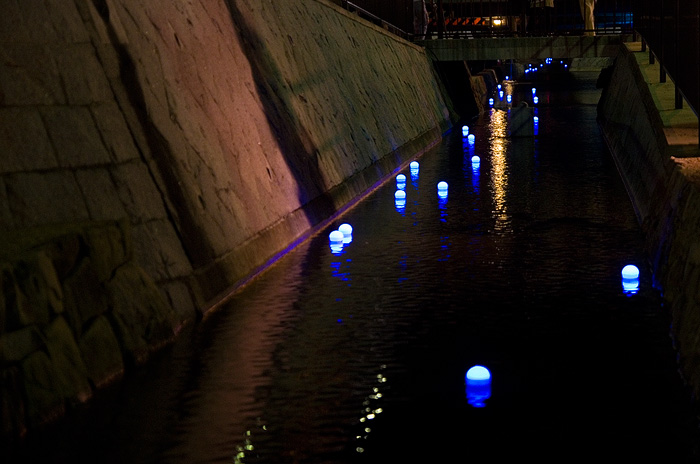
June 1, while I was watching NHK World, the show was about these LED orbs. One professor in Tokyo University said that while they were riding a helicopter around Tokyo with his wife, he could see the beauty of the city with the lights of the buildings, and thought that it looks wonderful. But he noticed that there was an area that was dark and somehow void. He realized that was the river. So, he said that people should also treasure the river.
And this Inori Boshi shows that the rivers are something we must treasure.
source
These Inori Boshi were made by Panasonic. It uses LEDs which saves energy and also rechargeable through solar power (solar-powered lights).
And one thing I like with this is that it automatically lights when you put it on the water.
source
Pupils from Kototoi Elementary School helped recharging these Inori Boshi before they officially put these on the river. They brought the lights on the rooftop (of their school, I think), allowing these to gain energy and recharge from the sun.
source
May 6, when they put the Inori Boshi on the river (including the pupils from Kototoi Elementary School and some other people), many people watched and were really amazed by the view. (I think that was a festival, Hotaru Festival?). Some of them were interviewed, and one said, "I wish for everything to go well for us."
source
And honestly, even though I only saw it on television, it really looked great. And my wish was that I was there, too, watching the amazing view of the river lit up by those wishing stars.

ღ   ღ   ღ   ღ   ღ   ღ   ღ   ღ   ღ   ღ   ღ   ღ   ღ   ღ   ღ   ღ   ღ   ღ   ღ   ღ   ღ   ღ   ღ   

   (。◕‿◕。)   

December 2011 Lunar Eclipse

Saturday, December 10, 2011

The world is now watching the Earth's sole satellite - the moon.
The lunar eclipse on December of 2011.
Image courtesy to @haselemon
These are the only nice shots I have found as of this moment. ;)
Image courtesy to @haselemon
Source: @haselemon
Special thanks to: @AtoZyoU for retweeting
Links: first photo     second photo

Image courtesy to Ilovejks
Notice, the moon turned red. Why is this so?
When light from the Sun goes by the side of the Earth, it passes through a long and thick layer of Earth's atmosphere. Shorter wavelengths of sunlight, like blue, are scattered by the atmosphere. So by the time the light has finished its trip to the moon, more of the longer wavelengths, like red, are left over.
Source: NASA

read more about this at NASA's website

Steve Jobs: a Wizard, Not a College Dropout

Monday, December 5, 2011

It's impossible to begin to understand the sources of Jobs's success without looking to his unusual life story. Both his heroic posture as an inspired crusader striving to change the world and his famed passion for thinking differently sprang from the circumstances of his upbringing: like the fictional Harry Potter, he was a misfit, raised by adoptive parents who ultimately discovered that he was a wizard among the muggles. Jobs was born out of wedlock to two wizards, a.k.a. graduate students at the University of Wisconsin, Madison: Abdulfattah Jandali, a Syrian immigrant pursuing his doctorate in political science, and Joanne Simpson, who was studying for her master's in speech. He was adopted at birth by Paul and Clara Jobs of San Francisco. Unlike Harry Potter's guardians, the Jobses were loving, supportive parents, but they were muggles nonetheless-working-class folks rather than the rarefied breed of intellectuals and artists that the teenage Steve envisioned as his own true identity.
Four of the hallmarks of Jobs's future business career --- his extraordinary persuasiveness, his constant risk taking, his rare deal-making ability, and his fierce perfectionism --- can be traced to his teenage years. The first three are sharply illustrated by his brief episode as a college student: Jobs would become known as one of the most famous college dropouts of our times, along with Microsoft's Bill Gates and Facebook's Mark Zuckerberg.
But in Jobs's case the "dropout" image is all wrong. He was actually a "drop-in": he matriculated at Portland's Reed College, a bastion of the counterculture and leftist artsy intellectualism, even though he knew his parents couldn't--and wouldn't--pick up the tab. When the first bill came due and went unpaid, Jobs talked the dean of students into letting him stay in the dorms and attend classes for free. That's how strongly he wanted to be at an elite school and obtain its validation that he was indeed a wizard rather than a muggle. And that's how good he was at persuasion and deal-making --- and how open to real risk...


Source: Newsweek Magazine
September 5, 2011 issue

"Can You Crack It?" Wanted: Spies

Sunday, December 4, 2011

Britain's GCHQ (Government Communications Headquarters) is looking for web-savvy cyber-sleuths-to-be.
Enter the correct keyword, and there is a countdown timer at the lower left side of the screen.
Here's the official website:
http://canyoucrackit.co.uk/


Read these articles:
1) http://news.yahoo.com/crack-spies-wanted-174506903.html
2) http://abcnews.go.com/blogs/technology/2011/12/can-you-crack-it-uk-agencys-website-seeks-new-spies/

Decode and be a spy. ;)

The Fascinating Force of Black Holes

image courtesy NASA
For the first time, scientists spotted a black hole devouring a star in a distant galaxy. One of the rarest astronomical events, it's believed to happen only about once per 100,000 years per galaxy.


"Earlier this year, scientists caught the first ever glimpse of 'one of the rarest of all astronomical events': a black hole gobbling up a star in a distant galaxy. Black holes are the Cookie Monsters of the universe, consuming everything in their path. The unfortunate star called Swift J 1644+57 actually met its demise 3.9 billion years ago..."


Here's the link to it:
http://whoknew.news.yahoo.com/who-knew/black-holes-27425876.html


Related articles:
http://www.euronews.net/2011/09/19/black-hole-caught-gobbling-up-a-star/
especially this one (from NASA):
http://www.nasa.gov/mission_pages/swift/bursts/draco-blasts.html

The 2010 Antarctic Ozone Hole

Friday, December 2, 2011

Each August, as sunlight begins to pierce the winter-long Antarctic night, UV radiation splits apart diatomic chlorine molecules that have formed on stratospheric clouds above the South Pole, and the freed radicals catalyze the breakup of ozone. For the part two and a half decades, increased chlorine concentrations from anthropogenic chlorofluorocarbons and related chemicals have led to extensive ozone depletion - the "Antarctic ozone hole".
The ozone hole reaches its greatest horizontal extent in late September or early October. This false-color image of ozone concentrations, based on UV and IR measurements by the National Oceanic and Atmospheric Administration, shows the ozone hole on 26 September 2010, at its maximal extent for the year. At roughly 20 million square kilometers, its area is larger than that of Russia.
Ozone concentrations are measured in Dobson units (DU). One DU of ozone would form a layer 10 micrometer thick at standard temperature ad pressure. The average ozone concentration planetwide is approximately 300 DU. Prior to 1979, ozone measurements over Antarctica were always above 220 DU, so 220 has emerged as the threshold for defining the hole.
Many factors, including weather and atmospheric dynamics, influence the size of the ozone hole. Thanks to the Montreal Protocol and subsequent agreements, stratospheric chlorine concentrations have declined from their peak in the early 2000s, but they remain higher than in the late 1970s and early 1980s, and ozone depletion will continue for several decades more. The World Meteorological Organization and United Nations Environment Programme recently released the executive summary of their 2010 report on the world's ozone layer; it is available at http://www.unep.ch/ozone.


Source: Physics Today magazine
www.physicstoday.org

Water Out of Thin Air

Wednesday, November 16, 2011

Inspired by Australia’s worst drought in a century, Mr Linacre - a former student at Swinburne University of Technology in Melbourne - turned to nature to find ways of capturing moisture from air.
He studied the Namib beetle, an ingenious species that lives in one of the driest places on earth.
With half an inch of rain per year, the beetle can only survive by consuming the dew it collects on the hydrophilic skin of its back in the early mornings.
Airdrop uses the same concept, working on the principle that even the driest air contains water molecules that can be extracted by lowering the air’s temperature to the point of condensation.

credits: did-you-kno

Invisibility and Teleportation - Could These Be Possible?

Monday, November 14, 2011

These two seem to be kinda impossible. But, scientists are looking for ways to make these come true. Science and technology is increasing and developing everyday, and scientists believe that these may come true.
So, I'll just direct you to the sites where these articles can be found. :)


With the research going on among the scientists, and the other people responsible for these, we have no other choice but to wait for their conclusion.

An Asteroid Missed the Earth

Saturday, November 12, 2011

I just read yesterday in Popular Science magazine that in the year 1989, a mile-wide asteroid (or was that more than 1 mile wide? :D) swept across the Earth's orbit 6 hours after the Earth had passed. That's more frightening than you think.
----------
On November 9, 2011 (Wednesday), an asteroid (2005 YU55) passed by Earth within the moon's orbit. Here are some of the links that I found about this topic:


1) National Aeronautics and Space Administration (NASA)
2) CBC News (Canada)


visit NASA's website: www.nasa.gov

Bronze vs. Copper

Monday, October 24, 2011


QUESTION ANSWERED.
i have been wondering about this for a long time.
so, i searched for it, and found this on yahoo answers.
—————

Bronze medal vs copper.?


today a question struck me out of the blue:
why is there a bronze medal as a reward for the second runner up in sports and not a copper one?
It seems to be the more obvious choice to me, being the third in the short list of ‘precious metals’, gold, silver and copper?
and as i started to think about it, a second question came up:
when did people start to use gold, silver and bronze to signify a ranking?
was it when the three medals were introduced, which i believe was for the first modern olympic games in 1896, or has there been earlier use of the combination?

can anyone elaborate on these?

ANSWER


the reason that bronze was used over copper was the availability copper is sort of *scare there is more bronze in the world and a second thing is that bronze is more durable and copper is a little more destructible it was started in the original Olympics back in the days of ancient *grease/’/


*scarce
*isn’t it “Greece”?? :D


Here’s the link for it: click here